

Lian Li UNI Fan SL Wireless: What Springfield, MA PC Builders Should Know Before You Buy
The Lian Li UNI Fan SL Wireless still needs a power cable. What actually works, why new fans seem dead, and how to set them up right.
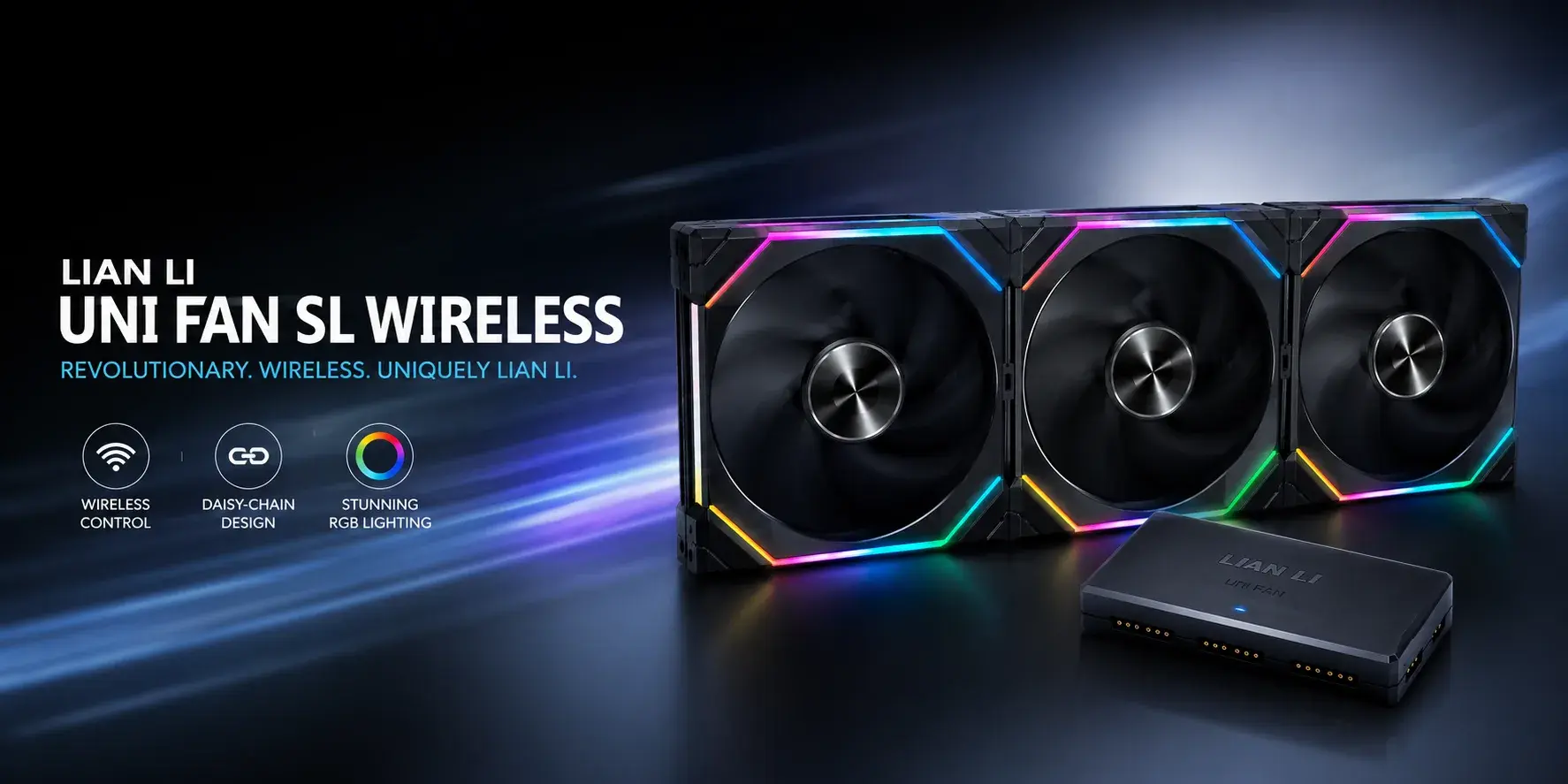
The Lian Li UNI Fan SL Wireless promises a clean build with fewer cables. Software controls your fan speed and RGB lighting instead of a tangled mess of wires. Sounds simple, right? The catch trips up most first-time builders: "wireless" doesn't mean cable-free.
The fans still draw power through a physical 4-pin PWM cable. Only the speed and lighting commands run wirelessly. Miss that detail, and you'll unbox your new fans thinking they're dead.
This guide explains what actually works, where setup fails, and how to avoid a frustrating afternoon of troubleshooting.
How the Wireless Control Actually Works
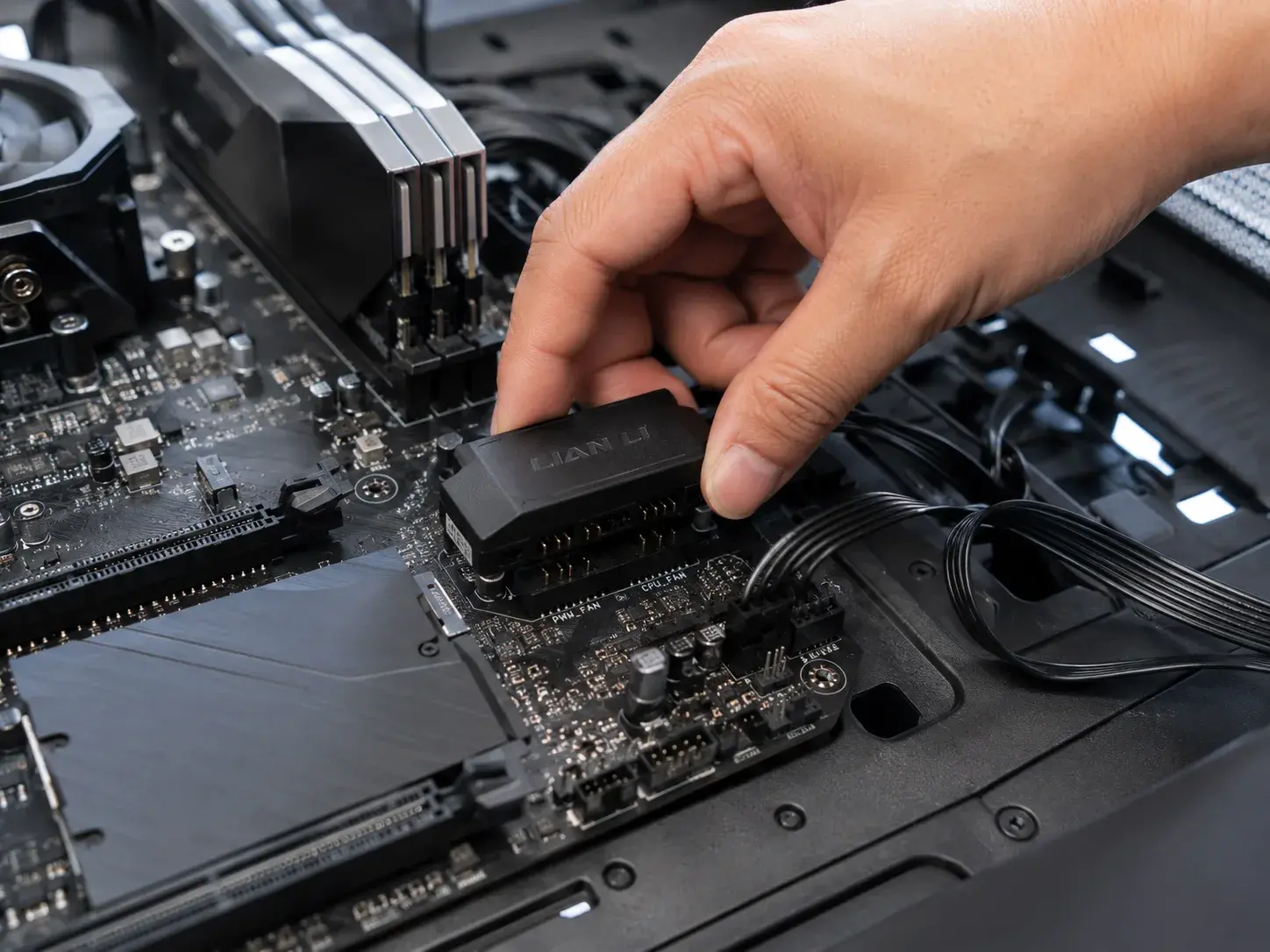
The SL Wireless uses a 2.4GHz L-Wireless controller. It plugs into your motherboard and sends speed and lighting commands to the fans. That removes the extra data cables older UNI Fan models required.
Power still runs through a 4-pin PWM cable to the motherboard. The fans spin the moment they receive power. The wireless signal handles control only, not electricity.
Here's the catch that trips up builders: the LCD version still needs a USB 9-pin cable for its screen. Only the LED version runs its controls fully cable-free.
Why Your New Fans Won't Respond (And How to Fix It)
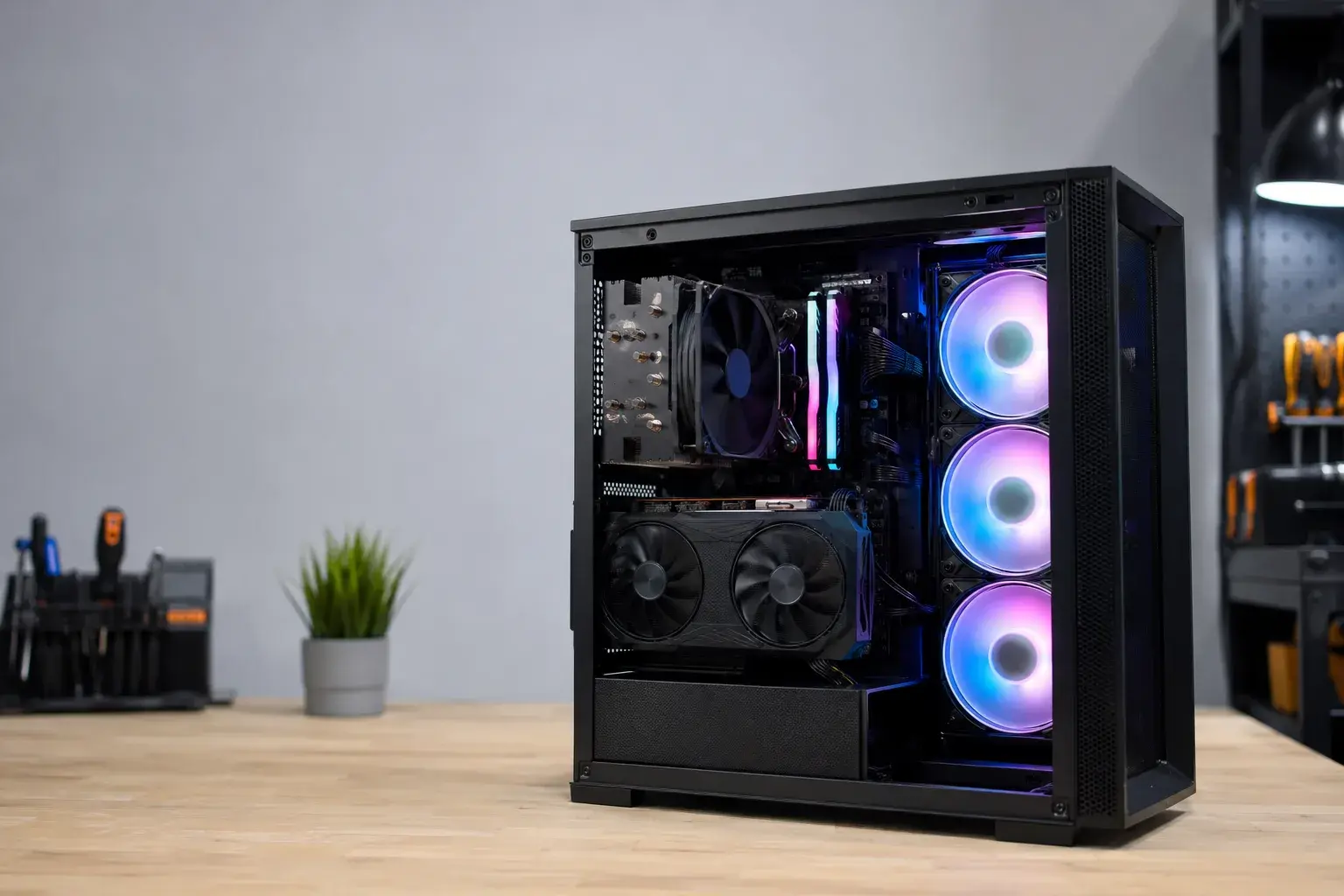
Most builders think the fans are DOA. They're not. The L-Wireless controller just isn't seated right, or the software isn't running yet.
Start here:
- Seat the controller firmly. Push the L-Wireless module all the way onto a motherboard PWM header. Don't let it sit loose.
- Confirm the daisy-chain click. Each fan clicks into the next one. If it feels loose, reseat it.
- Install L-Connect 3 first. Download it before your first boot. The fans won't respond without it.
- Watch for a flickering white light. That flicker means weak power from the motherboard port. It's not a defect.
If the light flickers, move the cable to a different 4-pin header. Still flickering? Use the included SATA adapter. That connector is beefier and solves the power problem.
LED vs LCD: Pick Your Trade-Off
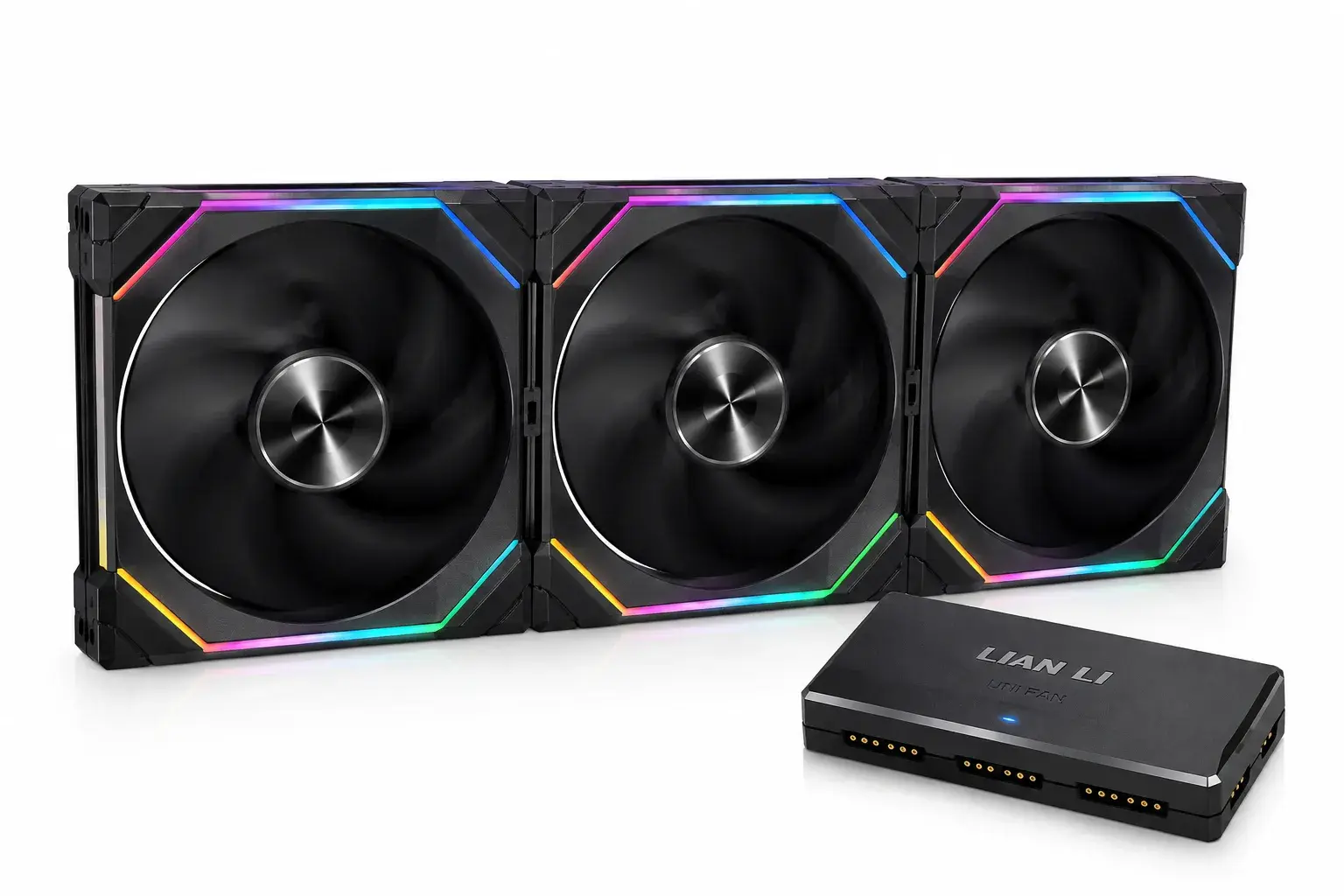
Both versions use the same snap-together connectors. The difference is cables and whether you want a display.
| LED | LCD | |
|---|---|---|
| Control cables | None (fully wireless) | Screen needs USB |
| Display | No screen | 1.6" IPS, 400×400 res |
| Max RPM | ~2000 | ~1900 |
| Best for | Clean builds | System monitoring |
Which should you pick?
LED fans are the play if you want zero extra cables. LCD adds one USB line for the screen, which defeats some of the cable-management benefit. Some builders run LED fans for cooling and one LCD as a display piece—gives you both benefits without the cable mess.
How to Use L-Connect 3, Lian Li's Control Software
Lian Li controls these fans through free software called L-Connect 3. Download it from Lian Li's site and install it on Windows. The fans stay on default settings until the software runs. Grab the latest version before your first boot.
L-Connect 3 rewards a little patience. Learn the four tabs below, and you control exactly how your machine looks and sounds.
First Launch and Detection
Open L-Connect 3 after the controller is seated and the PC is on. The app scans for your controller and fan groups.
- Let the software detect the controller and each fan group.
- Update the firmware if the app prompts you.
- Name each group so your layout stays clear.
If nothing appears, recheck the controller header and the daisy-chain connectors. Detected fans show up as tiles you can select and adjust.
Set Your Lighting
The Lighting tab controls color and effects across both light zones. Pick a preset or build your own look.
- Choose an effect, such as rainbow, breathing, or static.
- Adjust color, speed, and brightness.
- Sync groups for one unified look, or split them by zone.
Save the profile so it survives a reboot. Otherwise the fans can reset to default on the next startup.
Set Fan Speed and Curves
The Fan Speed tab decides how loud and cool your build runs. You can automate it or set it by hand.
- Link fan speed to CPU or GPU temperature for automatic curves.
- Or set a fixed RPM for steady, predictable noise.
- Save a curve per group to match airflow zones.
A temperature curve keeps your gaming rig quiet at idle and ramps up under load. That balance is the main reason builders bother with the software.
Customize the LCD Screen (LCD Version Only)
The LCD tab drives the 1.6-inch screen on LCD fans. Show live stats or your own art.
- Display CPU or GPU temperature, load, or fan speed.
- Upload an MP4, GIF, JPG, or PNG.
- Use the built-in screen record or screenshot tool to create content.
Keep L-Connect 3 running in the background for live monitoring. Close it, and the hardware dashboard stops updating.
Are These Fans Worth It?
Consider these fans if you value a clean interior and software control. The fluid dynamic bearing runs quiet, and airflow holds up well for case fans. The wireless design also frees up USB headers for other gear.
Think twice if your case is tight. At 120 x 124.5 x 28mm, these fans sit wider and thicker than standard 120mm fans. Measure your chassis first, especially in compact cases where space is a constraint.
If the setup feels like a hassle, a local shop like us can handle the whole job. PHYX Repairs builds gaming PCs in-house (95 Mill Street, Springfield, MA) and handles cable management like this every week.
FAQs
Q: Are these fans actually wireless?
A: Nope—they still need a 4-pin power cable to the motherboard. Only the speed and lighting controls are wireless (2.4GHz signal). The LCD version adds a USB cable for its screen. If you want to minimize extra cables, go with the LED version.
Q: What should I do if my new fans won't respond?
A: Check three things: (1) Controller is pushed firmly onto a motherboard header. (2) L-Connect 3 software is installed. (3) Each fan clicks into the daisy-chain. If you see a flickering white light at startup, move the power cable to a different header or use the included SATA adapter. That usually fixes it.
Q: Can PHYX build a PC with these fans?
A: Yes. PHYX does custom gaming PC builds at 95 Mill Street in Springfield, MA, including cable management and full testing. Bring your own parts or let us source components. Call 413-234-4313 or email repairs@phyx.me.
Contact PHYX
PHYX Device Repair & Sales
95 Mill Street
Springfield, MA 01108
📞 (413) 234-4313
Hours:
- Monday–Friday: 10 AM–7 PM
- Saturday: 12 PM–5 PM
- Sunday: Closed
Next Step
If you're planning a clean gaming PC build or need help installing these fans, contact us. We handle builds with cable management, airflow planning, and full component testing. Walk in, call, or email to discuss your build.