
Are Replacement Phone Screens From China? How the Screen Supply Chain Works
Are replacement phone screens from China? How the screen supply chain works, what OEM means, and how to pick the right quality.
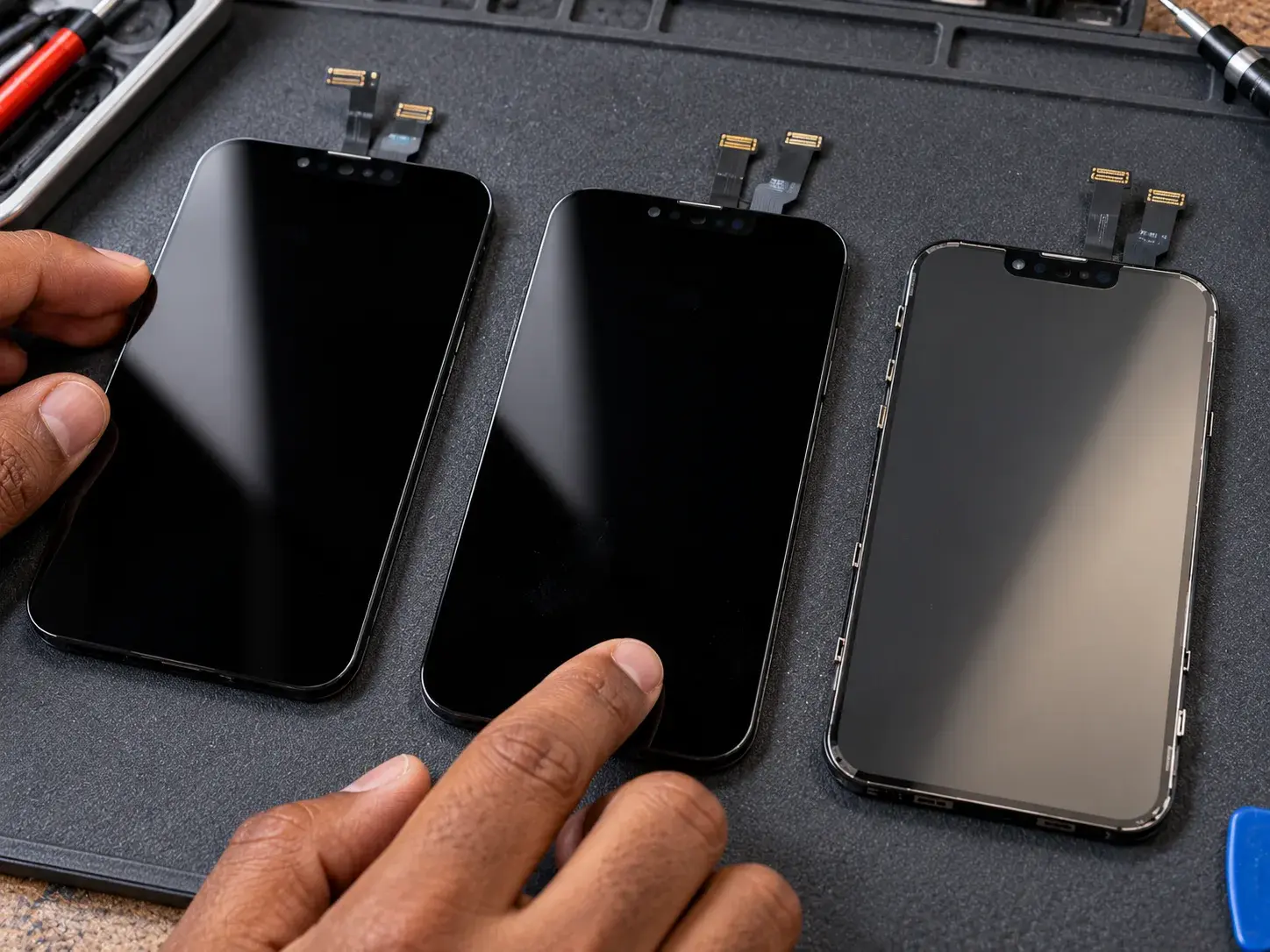
A customer came into the shop on September 28, 2026 with a cracked iPhone and one question before anything else. "Do you use China screens, or OEM parts?"
It is a fair question. The honest answer surprises most people. Nearly every replacement screen on the repair market passes through China at some point, and that includes the expensive ones. The real question is not where the screen comes from. The real question is which quality of screen you get, and what you pay for it.
Here is how the screen supply chain works, what the quality labels mean, and how to ask a repair shop the right question.
Where Original iPhone Screens Are Made
Apple does not make its own screens. It buys OLED panels from display manufacturers. For the iPhone 17 series, UBI Research data from October 2025 put Samsung Display at 64.5% of iPhone 17 OLED shipments, LG Display at 34.1%, and BOE at 1.4%. Samsung Display and LG Display are South Korean companies. BOE is Chinese.
So the original panel in your iPhone can start in South Korea. Then the panel goes to final assembly, and much of that assembly happens in China. The display supply is also not fixed. Apple moves orders between these three companies from model to model, according to earlier supply reports from the same firm.
That is the first thing to know. Even a factory original screen has a supply chain that crosses borders.
Where Replacement Screens Come From
The repair parts market is a different system from Apple's factory system. Most replacement screens come out of the electronics manufacturing area around Shenzhen, China. There are two main sources.
OEM pulls and refurbished originals
"OEM" means Original Equipment Manufacturer. For a phone screen, it means the panel the phone maker installed at the factory. The repair market gets these panels from used and broken phones.
A phone with a cracked glass often still has a working OLED panel under the glass. Refurbishers separate the broken glass from the panel, laminate new glass onto the original panel with optical adhesive, and test it. Suppliers also sell "pulls," which are original screens taken out of recycled devices and sorted by condition. MobileSentrix grades its OEM pull parts from new down to a C grade, based on the condition of the device they came from.
The panel is original. The glass, adhesive, and frame are often not. That is why two "OEM" screens can look and feel different.
Aftermarket screens
Aftermarket screens are new screens made by third-party factories. They are built to fit the phone, but the phone maker did not make them. Quality varies a lot between factories and between product lines.
Our suppliers sort aftermarket screens into named tiers. For example, PhoneLCDParts lists an iPhone 13 "Aftermarket Pro Soft" OLED assembly next to cheaper Incell LCD versions and more expensive genuine versions of the same part. Same phone, same shape, very different screen.
Screen Quality Tiers Compared
This table covers the common screen types for an OLED iPhone. The names change from supplier to supplier, but the technology underneath stays the same.
| Screen type | What it is | How it looks | Relative cost |
|---|---|---|---|
| Genuine / new OEM | Factory original panel, new | Matches the original phone | Highest |
| OEM refurbished or pull | Original panel, often with new glass | Close to original, depends on grade | High |
| Aftermarket soft OLED | New third-party OLED on a flexible base | Good color and contrast, thin | Middle |
| Aftermarket hard OLED | New third-party OLED on a rigid glass base | Good color, thicker, more fragile | Lower middle |
| Aftermarket Incell LCD | LCD panel with touch built into it | Dimmer, lower contrast, thicker | Lowest |
Why OLED versus LCD matters
On an OLED screen, each pixel makes its own light. A black pixel turns off completely, so blacks look truly black. An LCD uses a backlight behind the whole panel, so blacks look a little gray, and the screen uses more power to show dark content.
An Incell LCD in a phone that came with OLED works fine for calls, texts, and apps. You will see the difference side by side, especially in a dark room.
Why "soft" versus "hard" OLED matters
A soft OLED is built on a flexible plastic base, the same basic design Apple uses. That lets the maker fold the panel's connection under the display, so the screen fits like the original. A hard OLED is built on rigid glass. It is thicker, and a drop is more likely to crack it.
Community reports tell the same story. Repair techs on iFixit discuss which aftermarket lines hold up, and the answer depends on the specific product line, not the country.
What Apple Says About Non-Genuine Screens
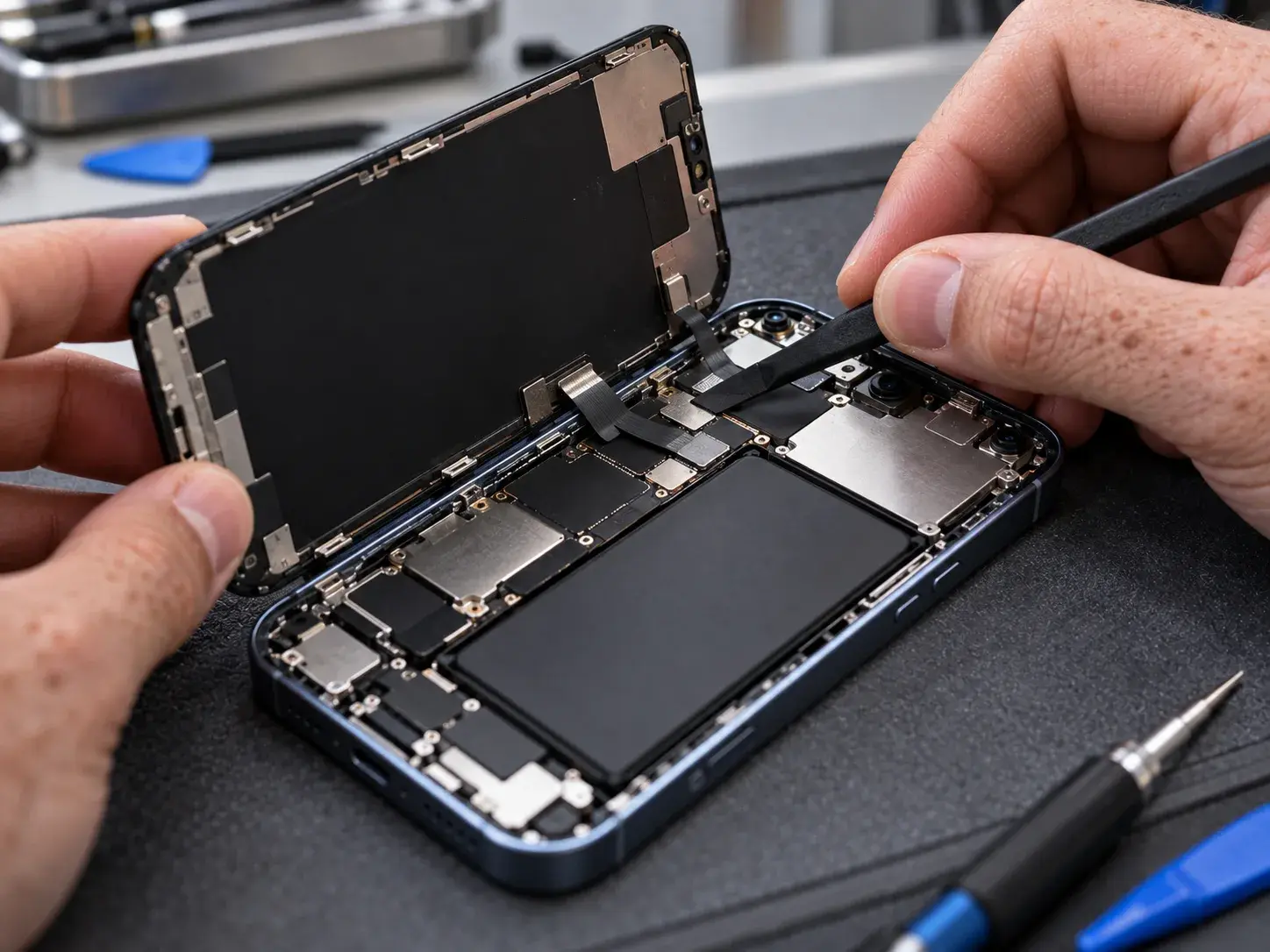
Apple is direct about this. Its support page about genuine iPhone displays lists what can go wrong with a non-genuine screen:
- Touch that does not respond on parts of the screen
- True Tone that does not work as expected
- Auto-brightness that dims or brightens at the wrong time
- Color that looks too yellow or too blue
- Uneven or lower maximum brightness
Some of these depend on the quality of the part and the repair. For example, True Tone on many models needs data from the original screen. A shop with the right programmer can transfer that data to the new screen. That is what "IC Transfer Eligible" means on a supplier listing.
Your iPhone also keeps a record. Under Settings, General, About, the Parts and Service History section shows "Genuine" or "Unknown" next to the display. A non-genuine screen shows "Unknown." Apple says this can affect trade-in value. The phone still works.
How to Choose a Screen Repair
Here is the deal. The best screen for you depends on how long you plan to keep the phone and what you want to spend.
- Keeping the phone for years, or trading it in soon: A genuine or OEM screen matches the original, but it costs a lot more. On Samsung phones, that option is easy to get. On iPhones, it is harder, so most iPhone repairs use a quality aftermarket OLED.
- Keeping the phone for a year or two, on a budget: A quality aftermarket soft OLED gets you close to the original look for a lot less money.
- Backup phone, kid's phone, or a phone you plan to sell as-is: Some shops offer an Incell LCD as the lowest-cost fix. It works, but on an OLED phone it is a clear step down.
At PHYX, our standard is the highest-quality aftermarket screen we can source for the price the customer pays. That covers most devices. If the phone came with an OLED screen, we use an OLED part, usually a soft OLED when one is available for the model. We typically do not put LCD screens on OLED phones, especially higher-end models.
Samsung phones are different. We can get Samsung service pack screens, which are genuine Samsung replacement screens made for repair. We offer that option to anyone who wants it. The cost is usually a lot higher, so most people choose the aftermarket part.
We also buy phones from the public. When one of those phones has a good original screen, we sometimes use it in a repair. So some customers get OEM parts, and the mix depends on what we have in stock. For iPhones, it is usually an aftermarket part.
We explain the tradeoff before the repair starts, so nobody is surprised by how the screen looks when they pick the phone up.
If something is not right after the repair, we will take another look. We stand behind our work.
The best question to ask any repair shop is not "Is it from China?" Ask this instead: "What type of screen is it, OLED or LCD, and is it original or aftermarket?" A good shop answers that in one sentence. You can see what we repair on our iPhone and Android repair page.
FAQ
> Q: Will I notice a difference with an aftermarket screen?
>
> A: It depends on the tier. A good soft OLED is hard to tell apart from the original in normal use. An Incell LCD is easier to spot, especially with dark photos or at night, because blacks look gray and the screen is a bit dimmer. If you hold the old phone and the repaired phone side by side, you can usually see the difference.
> Q: Will Face ID still work after a screen replacement?
>
> A: On most iPhones, Face ID hardware sits in the top of the phone, separate from the display panel itself. A careful repair keeps those parts connected and working. Damage to those parts during a drop or a careless repair is what usually breaks Face ID. Tell the shop if Face ID already failed before the repair, so they can test it first.
> Q: Why does my phone battery drain faster after a screen repair?
>
> A: Apple lists extra battery drain as one possible issue with non-genuine screens. The most common cause is an LCD screen in a phone built for OLED. An LCD keeps its backlight on behind every pixel, even black ones, so it uses more power with dark content. A quality OLED replacement avoids most of that. If the drain is severe, bring the phone back so we can check it.
Get a Straight Answer on Your Screen
If your screen is cracked and you want to know your options before you commit, send us the phone model and a photo of the damage. We will tell you which screen types we can get for it and what each one costs. [Text PHYX at 413-234-4313](sms:+14132344313) or message PHYX on Instagram.